Start: The lay-by on the Martley side of Ham Bridge
From the lay-by at Ham Bridge walk down to the gap into the field near the bridge and follow the signpost (1). In actuality the route crosses the field, some way away from the river bank, but often the crop is not cleared and walkers take a more obvious route!
Swallows and house martins dive across the river, a robin calls and a wren sounds its sweet and jubilant trill from a elderflower bush, so loudly for such a tiny bird.
Where a slight depression shows in the ground (an old boundary now removed) keep parallel to the river to the field boundary and stile. Maintain this direction and the path will lead you close to the river. Follow the waymark through the next field and through a gap in the line of ancient willows by the waymark (2) (You may be lucky enough to hear the Greater Spotted Woodpecker's call, a sharp “quick quick” and if a Blackcap is guarding a nest, its persistent alarm call, “chink chink” will be noticeable).
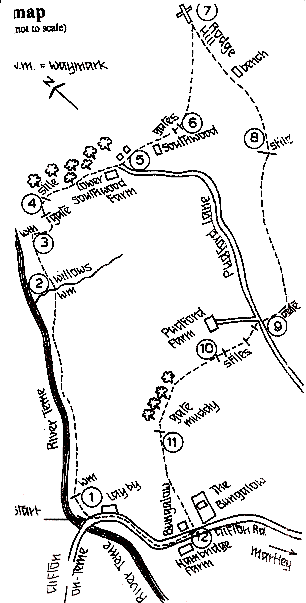
In the next field look for a track going up on the right with a waymark (3). Follow this track up to an old metal gate (watch the barbed wire!) and along side a field with horses. Walkers fortunately protected from their attentions by a wire fence.At the end cross the stile into woodland', (4), turn immediately right and follow the switchback path through woodland until the end of Pudford lane (5) is reached, by Lower Southwood Farm (The tiny goldcrest, smallest of European birds, inhabits these woods, particularly fir trees).
A short way along the lane, turn left at the signpost by the cottages and continue up, over a 'fence stile' and straight on into an old orchard. Climb the steep slope to a gate on the left side, go through it and continue through another gate (6). Keep the wire fence on your left to the end of the pasture and on up, through gate, to a path junction on the crest of the hill where you join the Worcestershire Way at a signpost indicating several ways (7). Turn sharp right along the ridge and note, on the right, the fine views of the Teme valley and the Clifton ridge. The strategically placed seat affords a view of the motte at Homme Castle below, the river Teme between its treelined banks, and the spire of Clifton's church of St. Kenelm on the ridge above the valley. The panorama stretches from the hills of Wales to the Clee Hills in Shropshire, and is one of the finest views in Worcestershire. Continue along the ridge to a gap (8) and then bear right (leaving the Worcestershire Way) go down between trees, now large, but newly planted when this was written! After some distance go through a field gate and turn right down to an metal bridle gate into Pudford Lane (9). Cross over the road and then a stile on the left of the drive to Pudford Farmhouse. Proceed diagonally across the field to a stile in a wire fence (10). Walk to a further stile as indicated by the waymark. Beyond this stile is another stile a few yards on the left and at right angles to it, partially hidden by a large hawthorn bush (now moved some 20 metres down the hedge, from its correct position). This stile used to be attached to an old gatepost with the inscription “SLADE NASH 1907” cut into the wood. Walk along the field edge keeping the woodland on your right and noting in the dip to the left, a large pond where Canada geese and goslings may be seen in early summer, also the occasional heron. Round the corner of the woodland, negotiate some boggy ground (11) and turn left down the field keeping the hedge on your left. Follow this track down to the road (B4204), by the bungalow (12). Turn right (single file essential) down to the layby at Ham Bridge.
Birds to listen out for, especially in spring: Tits (great and blue),chaffinch, mistle thrush, mallard, pheasant, wood pigeon, chiffchaff, blackbird, goldfinch, willow warbler, stock dove whitethroat, magpie, jay, dunnock (hedge sparrow).
With
acknowledgements to our local bird watcher, Andy Palmer.